
This week, we looked at how robotics can be used to foster creativity in education. We looked at a range of different robots that could be used in all different kinds of education settings, all the way from primary school to high school.
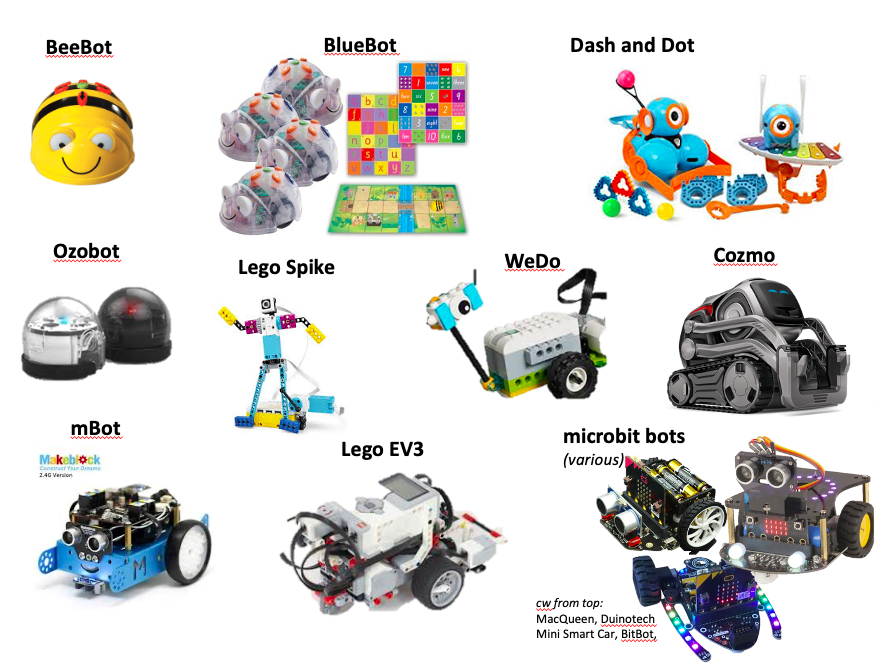
My group decided to focus on the Lego WeDo as we found we could apply it to both upper primary and lower high school (we all taught different age groups).
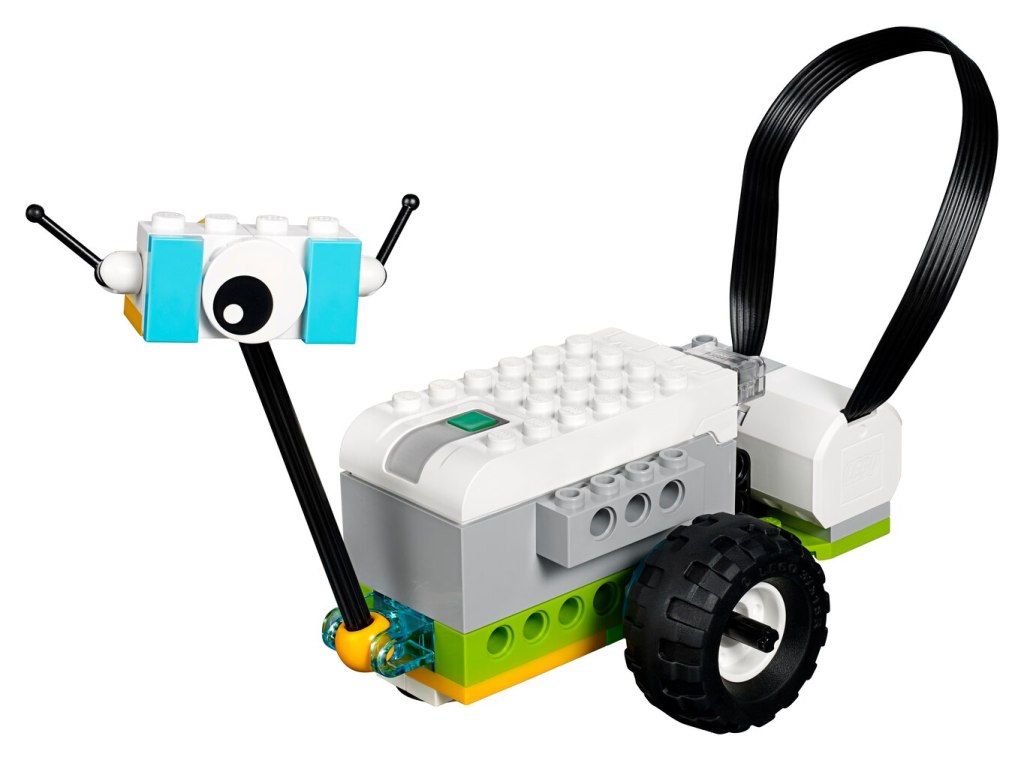
The Lego WeDo is a robot that comes in a kit comprised of 280 (version 2.0) different kinds of Lego bricks that can be attached to the ‘Smart Hub’, which is where all of the sound and motion sensors are. The Lego WeDo 2.0 core set is advertised as $319.95 AUD, which is quite expensive for such a small robot. If the WeDo is being bought in bulk for schools and other educational organisations, it can be bought in a 3 for 4 pack that costs $959.85 AUD (Modern Teaching Aids).
Despite the hefty costs, I believe that the Lego WeDo is an excellent tool for fostering creativity in the classroom. Lego WeDo uses both an online app (available on PC and tablet) and the physical bricks and motor for the robot. Obviously, creativity is fostered in a classroom when children are given the opportunity to use things like Lego to create anything tangible, but the addition of the WeDo app allows students to design and code their own robots too. So not only could students make a car out of the Lego WeDo, for example, but they could also program that car to move around in a certain way.
Robotics products like the Lego WeDo are a great example of how technology in education can move away from the idea of ““traditional” black-box technologies (technology that is ready-made for human use) to the design of transparent (white-box) digital artifacts where users can construct and deconstruct objects and have a deep structural access to the artifacts themselves” (Alimisis, 2012). This is the idea that students are no longer being given robots to play with, but they are being given ideas or problems to solve, and creating their own solutions with robotics and technology.
The main pedagogical ideology that robotics falls under is constructivism and constructionism. Constructivism is the idea that knowledge is not transferred from person to person, but constructed by the person’s current knowledge and previous experiences. Jung & Won (2018) discuss this in their article. “a constructivism framework presented their robotics education programs and curricula as providing young children with experiential opportunities to be active knowledge-constructors”. Essentially, giving students a product like Lego WeDo promotes creativity through constructivist pedagogies because children are learning from experience.
I can see myself using the Lego WeDo in a stage 4 English class by having students build the WeDo in the shape of a human (as a character from the target text) and programming in behaviours that reflect the character with the WeDo app.
References:
Alimisis, Dimitris (2012). Robotics in Education & Education in Robotics: Shifting Focus from Technology to Pedagogy. Robotics in Education Conference, 2012. Retrieved from: https://pdfs.semanticscholar.org/be99/1d6cface636a180fa394ee621c2bb09df1e7.pdf
Jung, S., & Won, E. S. (2018). Systematic review of research trends in robotics education for young children. Sustainability, 10(4), 905.
Retrieved from: https://www.mdpi.com/2071-1050/10/4/905/pdf
https://www.teaching.com.au/catalogue/mta/mta-wedo-2-robotics
 Digital Creativity and Learning
3 replies on “Robotics”
Hi Courtney. I enjoyed reading your post on robotics within the classroom, particularly with regards to your insight into the move away from black box technologies into more transparent ones. I would like to ask if there are any other types of consideration what need to be taken into accounts outside of cost. Are there any safety or handling procedure that need to be accounted for, or do students and staff require any additional training. Would lego pieces potentially be a choking hazard?
LikeLike
Hi Courtney,
I really enjoyed reading your week 4 robotics critique! Firstly, i liked how you chose the Lego Wedo and recognised that it can be implemented for a wide range of ages – both primary and high school. You also included the appropriated pedagogical approaches for your chosen technologies; ‘constructivism and constructionism’, which I think is important as a way of relating your technology into classroom practices. Also i thought it was great how you used a specific classroom example, great blog!
Lily
LikeLike
Hi Courtney
Interesting blog on how the lego WeDo can foster creativity, as well as develop students’ computational thinking skills. I particularly like how you emphasised how robotics is not about giving students robots to play with (even though it may look that way) but it is about using robots to provide a means of problem solving and finding solutions. This saves us as teachers to avoid falling in to the trap that robots are simply for students’ amusement and leisure. I also like the fact that the Lego WeDo also allows students to design their own coding and programming of the lego robot, as creativity is fostered through multiple means other than just building and constructing. Your idea for its usage in Stage 4 English is a great idea for students to narrate and represent their characters in different ways.
Overall great blog! Great ideas and insights!
LikeLike