
Technology has advanced to the point where we can go from the world around us to a completely virtual world in a matter of seconds.
Milgram, Takemura, Utsumi and Kishino give us a visual representation of this in the form of their Reality-Virtuality Continuum (1994). The continuum shows where the real environment and the virtual environment meet in the middle to become mixed reality (MR).

This blog post will be focusing on virtual reality (VR) and its affordances in education. Southgate (2018) has outlined how immersive virtual reality (IVR) has both strengths and weaknesses when it comes to using the technology in classrooms. Firstly, it can increase motivation and engagement, increase student empathy, and teach students more about computational thinking. Some of the drawbacks of IVR in educational settings include privacy issues, OHS issues, child protection issues and issues with student access to content that may not be appropriate. Despite both the positive and negatives, we still do not have enough research on IVR in the classroom, and many educators still have a preference for augmented reality (AR). Dede (2009) mentions that lesser immersion experiences, like AR, can still enhance learning.
This week, we explored different ways of using VR. There were different videos and images of head mounted displays (HMDs), but most of them could be quite costly. The Google Cardboard is a cheap alternative that could be used easily in classrooms as long as students had mobile phones to insert into the goggles. Once again, the main issue with this would be health and safety issues. It is recommended that students sit down while using VR goggles so they don’t get injured or dizzy.
Teachers can make their own VR experiences for their students by using the Google Street View App.
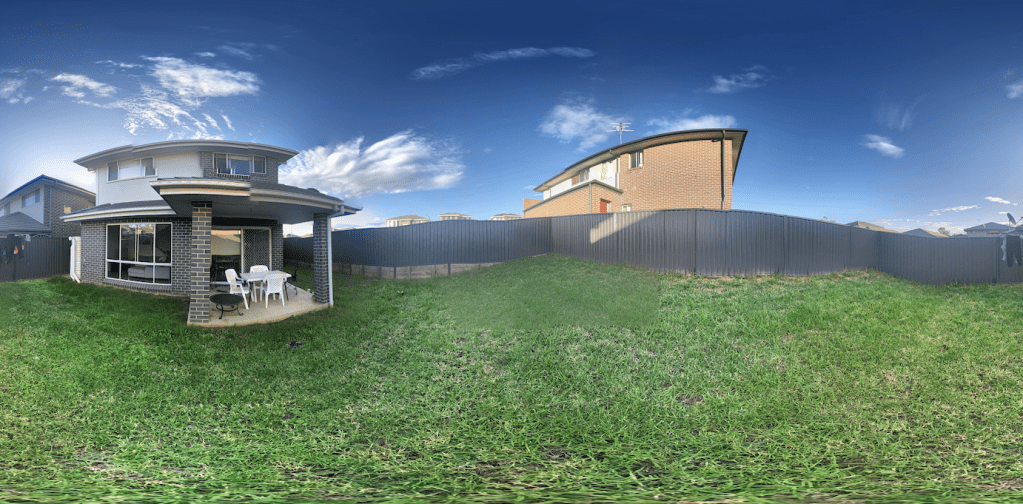
When viewed with VR goggles, the above image is displayed as a 360 degree image. This can then be uploaded onto CoSpaces as an environment for students to create their own virtual world.
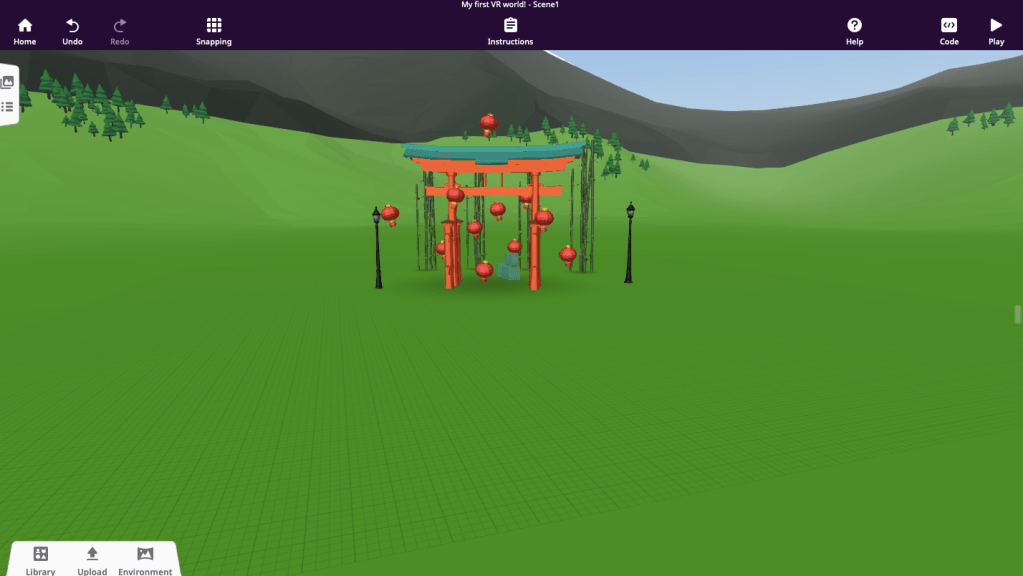
The use of CoSpaces allows for creativity to be brought into the use of VR technology in the classroom. Students become producers of VR worlds and technology rather than just consumers of pre-existing worlds and games.
References:
Dede, C. (2009). Immersive interfaces for engagement and learning. science, 323(5910), 66-69.
Milgram, P., Takemura, H., Utsumi, A., & Kishino, F. (1994). Augmented reality: A class of displays on the reality-virtuality continuum. Telemanipulator and Telepresence Technologies. 2351. 10.1117/12.197321.
Southgate, E. (2018). Immersive virtual reality, children and school education: A literature review for teachers.
 Digital Creativity and Learning
One reply on “Virtual Reality in Education”
I liked your inclusion of the reality-virtuality continuum, so weird to think that came out over 25 years ago…I wonder if the continuum would look different in 2020?
LikeLike