
Computational thinking has many different definitions. According to Jeannette Wing, “computational thinking builds on the power and limits of computing processes, whether they are executed by a human or by a machine” (2006). The Australian Curriculum defines computational thinking as “a problem solving method that involves various techniques and strategies that can be implemented by digital systems… organising data logically, breaking down problems into parts, defining abstract concepts and designing and using algorithms, patterns and models” (2015). From these definitions, we can determine that computational thinking is the idea that it is a process of thinking (by either human or machine) that allows for problem-solving and decision-making to be simplified.
Currently, computational thinking only features in one curriculum area in the Australian Curriculum – Technologies. Technologies is mandatory in stage 4, and optional in stages 5 and 6. The issue with this is that computational thinking can be applied to every KLA in the Australian Curriculum. This week, I explored some different technologies that make computational thinking more of an option in my KLAs (English and LOTE).
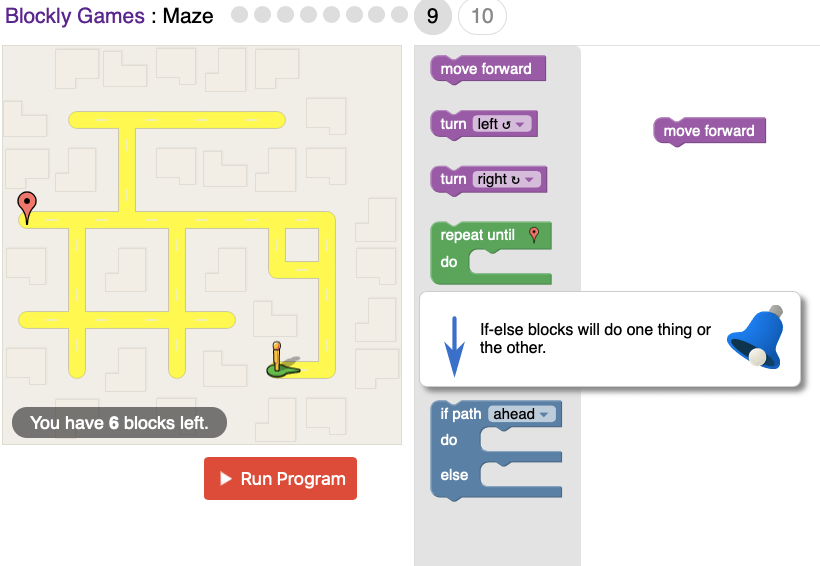
The first technology that I played with was Blockly Games: Maze. This game was a great way for me to get into the mindset of computational thinking. I realised that using computational thinking is not just something you can ‘switch on’ when you’re new to it. You need to train your brain and teach yourself at first.
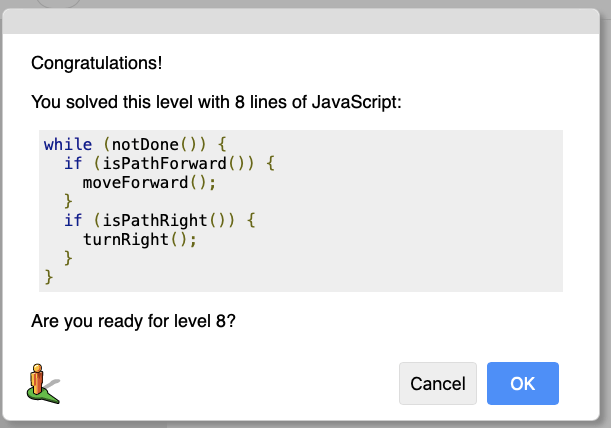
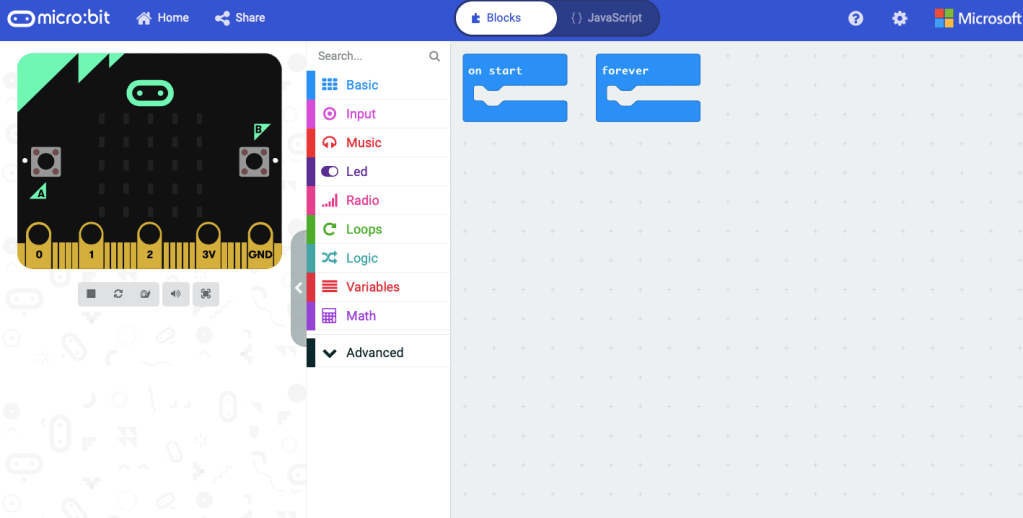
The second technology I used was Microbit. Microbit requires a small piece of technology that you plug into your computer.
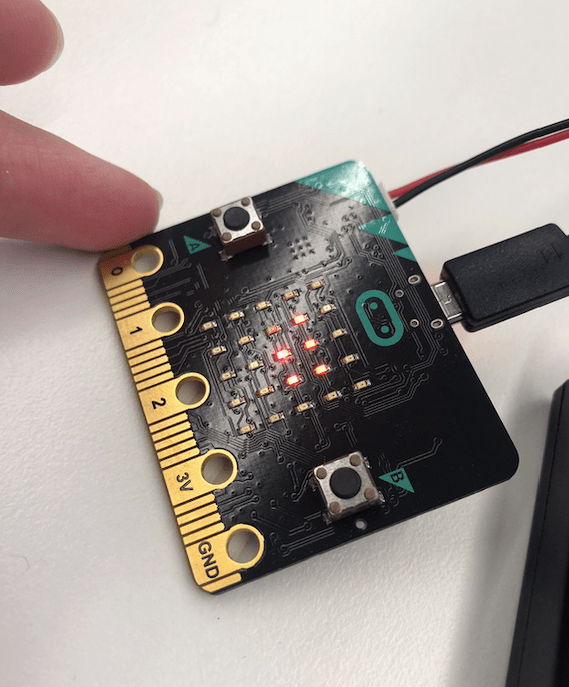
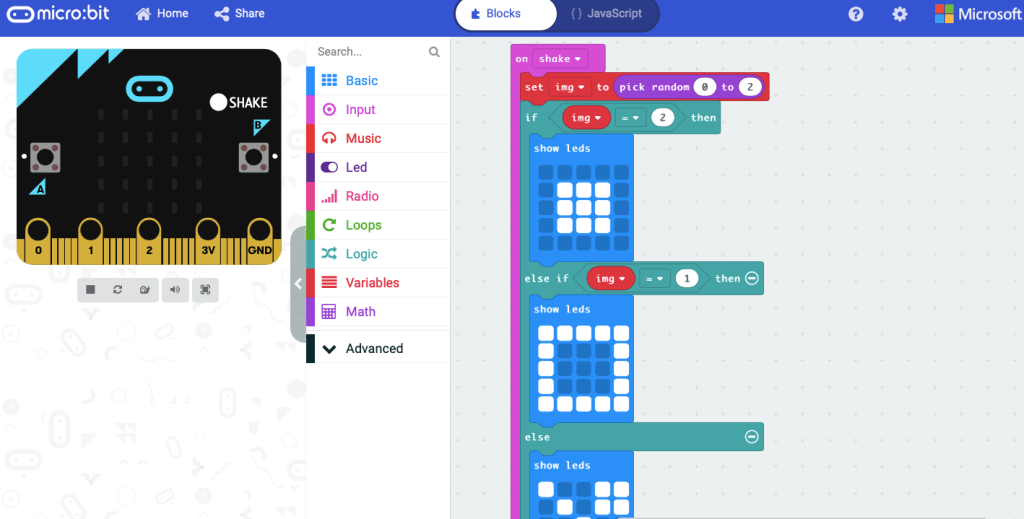
You then use the online Microbit website to program the physical Microbit to do different things.
I would love to use the Microbit in my LOTE (Japanese) classroom to help my students learn the hiragana and katakana characters. An example activity could be getting them to program the Microbit to cycle through the characters with the LED lights when they press the A and B buttons.
I believe that computational thinking is an extremely important skill for all people to learn and have. I also feel that it can be used in every KLA in some way.
References:
ACARA (2015). Glossary. The Australian Curriculum. Retrieved from https://www.australiancurriculum.edu.au/f-10-curriculum/technologies/glossary/?letter=C
Wing, J. M. (2006). Computational thinking. Communications of the ACM, 49(3), 33-35.


2 replies on “Computational Thinking”
Hi Courtney! Thankyou for sharing! As a visual learner, I loved the amount of pictures that were used in this blog post! It was great that you included two definitions of computational thinking, to really consolidate your understanding of this skill and also enjoyed how you linked Blockly to your experience and how you found it.
It was interesting to read about two computational thinking applications: Micro:bit and Blockly but I would have loved to hear more about the strengths and limitations of both applications and what stage’s would benefit the most from these applications.
I agree that it can definitely be used in all KLAs and its wonderful to hear that you will be using this in your Japanese classroom to engage the students.
LikeLike
Hi Courtney,
Your definition of Computational Thinking demonstrates a key understanding of the significance of problem-solving and decision-making skills. Your statement “computational thinking can be applied to every KLA in Australian Curriculum”, demonstrates a great understanding of how computational thinking can be used in all subjects regarding the teacher selects the correct technology. The two technologies “Blockly Games: Maze & Microbit”, displays a great way to teach students how to code. However, I was interested in how the Microbit assists with teaching Japanese. Lastly, I couldn’t agree with you anymore that we as teachers need to train our brains before we teach our students brains.
Regards
Hugh
LikeLike